

SLP THERAPY MATERIALS
FOR SOCIAL SKILLS AND
PRAGMATIC LANGUAGE
Social Skills Resources for Speech Therapists Who Are Ready to Ditch the Sunday Scaries
Done-for-you SLP therapy materials built around The Social Skills Blueprint® framework so your sessions have structure, sequence, and a neurodiversity-affirming approach your students will actually respond to.
Tired of feeling underprepared every time pragmatic language goals come up on your caseload?
Finding materials for speech and language therapy for social skills and pragmatic language that actually feel organized, ethical, and worth using is harder than it should be.
Do any of these sound familiar?
You have social communication goals on your caseload and you're not sure where to start or how to make sessions feel truly effective.
You've been piecing sessions together from whatever you can find online, and nothing feels cohesive enough to build on week after week.
The materials you've tried don't feel like a good fit for your students' ages or needs, or they don't sit right with you ethically.
Your social skills sessions give you the Sunday scaries because even though you try your best to prepare, you still walk in feeling like you're winging it.
You want to feel like you're actually making a difference, but without a clear framework it's hard to know if your students are making any real progress.
You didn't learn much about pragmatic language in grad school and you find yourself second-guessing your clinical decisions every time these goals come up.
Everything You Need to
Plan, Teach, and Feel Confident
in Your Social Skills Sessions
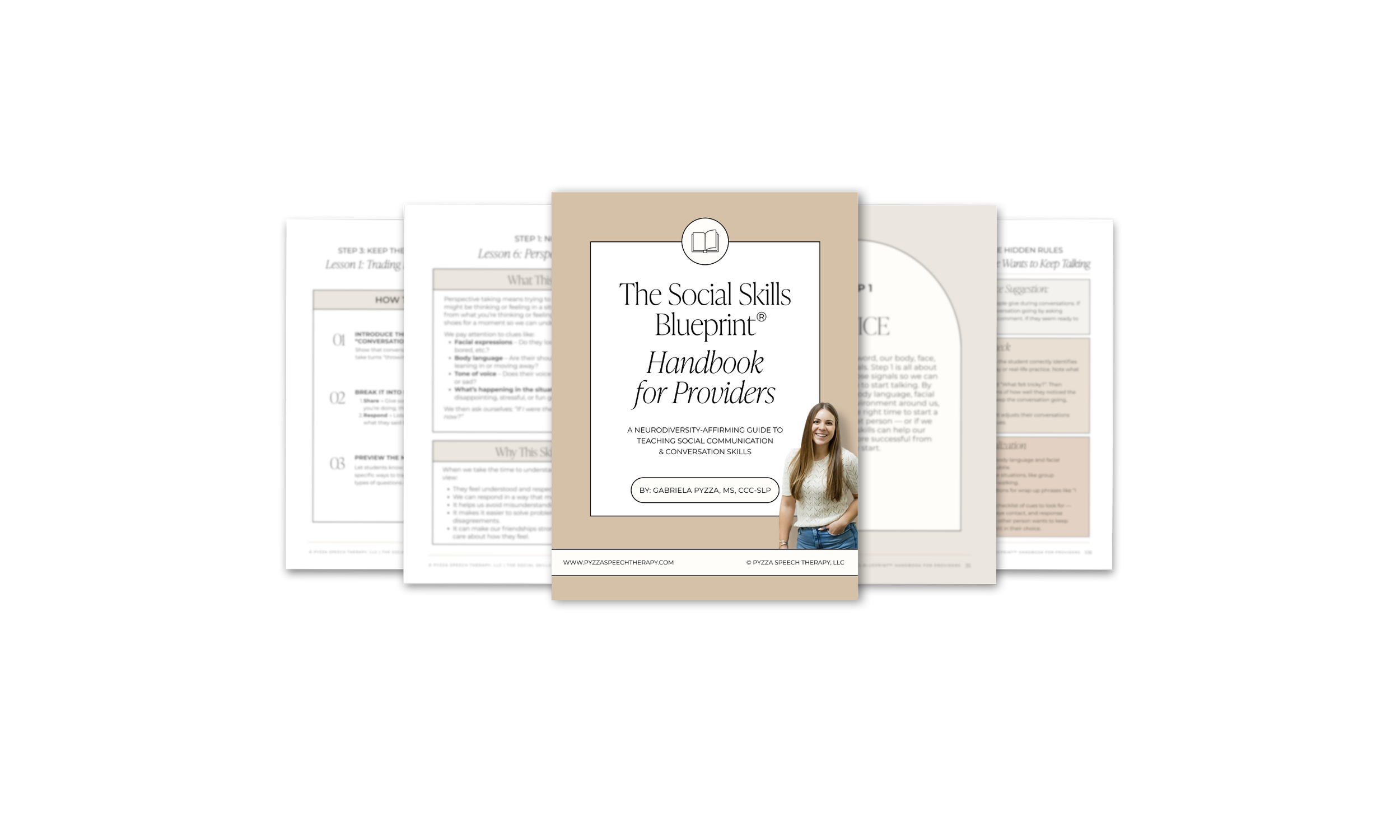
The Social Skills Blueprint® Handbook for Providers
Your step-by-step roadmap for social skills and pragmatic language therapy.
This is the resource that finally takes the guesswork out of planning social skills and pragmatic language sessions. The Social Skills Blueprint® Handbook for Providers walks you through 27 neurodiversity-affirming micro-skill lessons, each with a clear teaching guide including what the skill is, why it matters, and how to teach it in a way that your students will actually connect with. Activity suggestions, modification tips, and generalization supports are built right in, so you always know where you are, where you're going, and exactly what to do next.
Download it, open it, and walk into your next session feeling prepared.

The Social Skills Blueprint® On-Topic Conversations Workbook for Kids and Teens
A ready-to-use carryover tool your students can take home.
Staying on topic is one of the most common pragmatic language goals on caseloads, and an area that students often need consistent practice with for the skill to generalize outside of sessions.
This 46-page printable workbook gives your students and their families a structured, therapist-designed resource to keep practicing between sessions. With 11 progressive worksheets, a 30-day challenge, and a parent coaching guide built right in, it gives families everything they need to support the skills you're targeting in sessions.
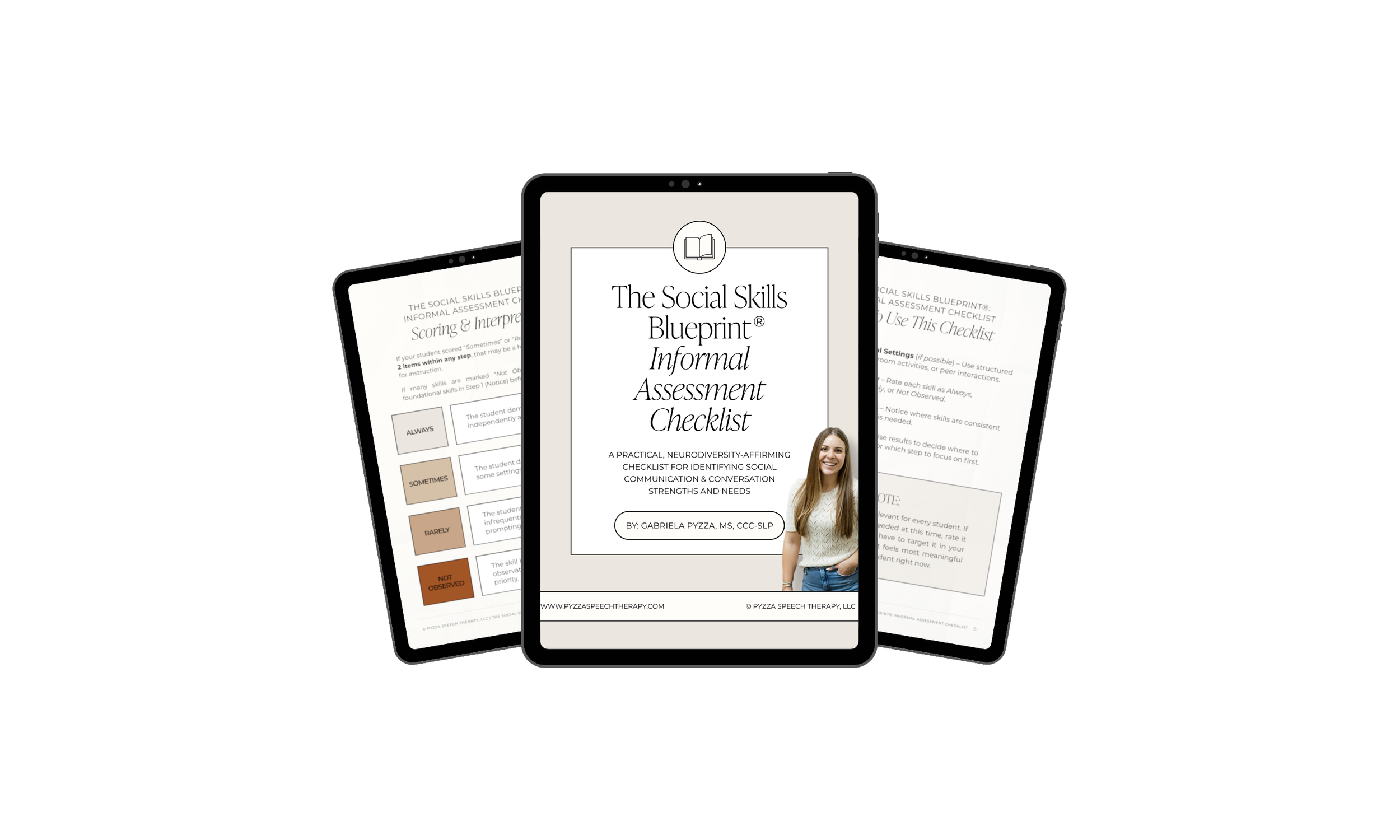
The Social Skills Blueprint® Informal Assessment Checklist
A FREE starting point for social skills and pragmatic language therapy.
This free checklist helps you identify your student's strengths and areas of need across key conversation and pragmatic language skills, so you can walk into your next session with a clearer direction. It's a practical, neurodiversity-affirming first step that takes the guesswork out of where to begin.
125+
SLPs reached nationally
10+
Years of Experience
5,000+
Sessions completed
TESTIMONIALS
TESTIMONIALS
Questions Providers Ask About These Resources
What SLP therapy materials do you offer for social skills and pragmatic language?
Right now I offer three resources for working on social skills and pragmatic language goals: The Social Skills Blueprint® Handbook for Providers, the On-Topic Conversations Workbook for Kids & Teens, and a free Informal Assessment Checklist. The handbook is the most comprehensive: a complete five-step framework with 27 neurodiversity-affirming lessons and a clear scope and sequence. The workbook is a student-facing carryover tool. The checklist is a free starting point for assessment and goal planning.
Are these materials for speech and language therapy neurodiversity-affirming?
Yes, and that was a non-negotiable when creating them. Every lesson in The Social Skills Blueprint® Handbook for Providers is built around giving students tools and choices, not scripts and forced rules. The goal is never to make students mask or act neurotypical. It's to give them access to what's possible in social situations they actually want to be part of. Providers who've used these materials often share that they finally feel good about this work, both professionally and ethically.
Can I use these resources for speech therapists in both individual and group sessions?
Absolutely. The Social Skills Blueprint® Handbook for Providers and the On-Topic Conversations Workbook for Kids & Teens were designed to be flexible across both settings. Whether you're working one on one or running a social skills group, the five-step framework and lesson guides adapt easily to fit your session structure, caseload size, and student needs.
What grade levels are these SLP therapy materials appropriate for?
The Social Skills Blueprint® Handbook for Providers is designed for grades 3 through 12, with modification tips built into every lesson for younger learners, older learners, and students experiencing social anxiety. The On-Topic Conversations Workbook for Kids & Teens spans elementary through high school age too. The framework is scaffolded, so you can meet students where they are and progress at their pace.
How are these materials different from other social skills resources?
Most materials for speech and language therapy in this area are either a random collection of activities with no clear sequence, or they feel uncomfortable to use because they promote masking, shame students into compliance, or pressure them to appear neurotypical and adjust their behavior to make others happy. The Social Skills Blueprint® is different because it's a structured framework with a clear scope and sequence, so you always know what to teach, when, and why. Everything is neurodiversity-affirming, organized, and designed to help students understand the value of various social skills for their own lives, relationships, and social goals, so they can apply them in ways that still honor who they are.
I already have social skills materials and activities. Do I still need the handbook?
Activities are a great supplement, but without a framework to organize them around, it's easy to feel like you're targeting skills randomly without a clear direction. The Social Skills Blueprint® Handbook for Providers gives you the roadmap so you always know where you are, where you're going, and what to do next. Think of it less as a replacement for what you already have and more as the structure that makes everything you have actually work together.
What is pragmatic language and why is it so hard to teach?
Pragmatic language refers to the social use of language, including skills like starting and maintaining conversations, understanding unspoken social rules, staying on topic, and reading the room. It's one of the most challenging areas to teach because it wasn't covered well in most graduate programs, the resources available tend to be piecemeal and inconsistent, and the skills themselves are highly complex and contextual and can be hard to generalize outside of sessions. That's exactly why I created a structured, framework-based approach rather than a collection of random activities.

You went to grad school for this. You deserve resources that actually make you feel prepared.
Whether you're starting with the free checklist or ready to dive into the handbook, the right SLP therapy materials are here and you can have it in your hands within minutes.