

THE SOCIAL SKILLS SPOTLIGHT BLOG
Your Go-To Source for Social Skills Tips for Parents and Resources for Speech Therapists
Whether you're a parent looking for speech and language tips to help your child navigate social situations and friendships, or a provider searching for social skills resources for speech therapists and a clearer framework for teaching them, you're in the right place. Pull up a post, take what's useful, and come back to continue your learning.
FEATURED POSTS
FEATURED POSTS
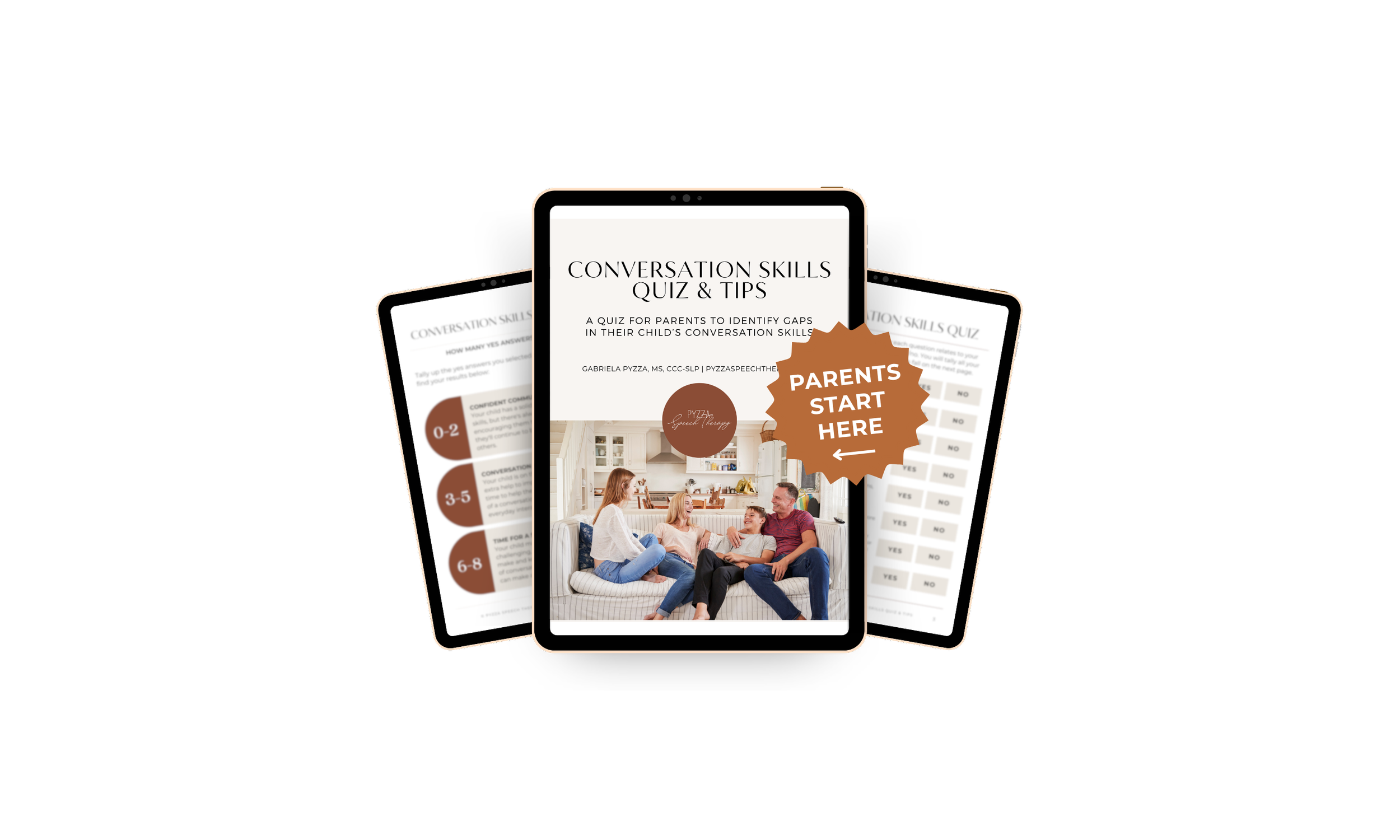
Free Parent Resource
Conversation Skills
Quiz + Tips
Not sure where your child's conversation skills stand? Take the free quiz and get a clearer picture of where your child is doing well and where a little extra support could make a real difference.
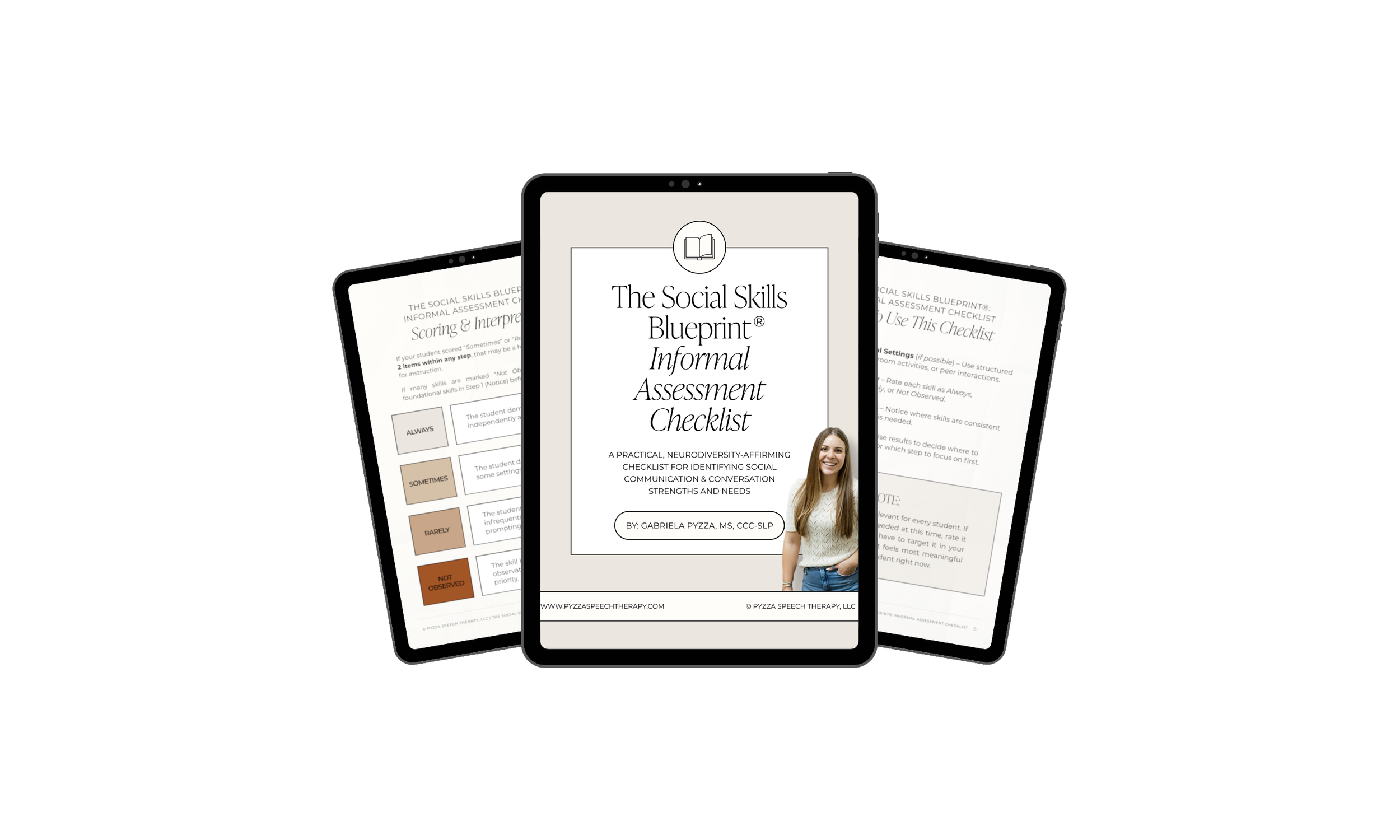
Free Provider Resource
The Social Skills Blueprint® Informal Assessment Checklist
This free checklist helps you identify your student's strengths and areas of need across key conversation and pragmatic language skills, so you can walk into your next session with a clearer direction. It's a practical, neurodiversity-affirming first step that takes the guesswork out of where to begin.
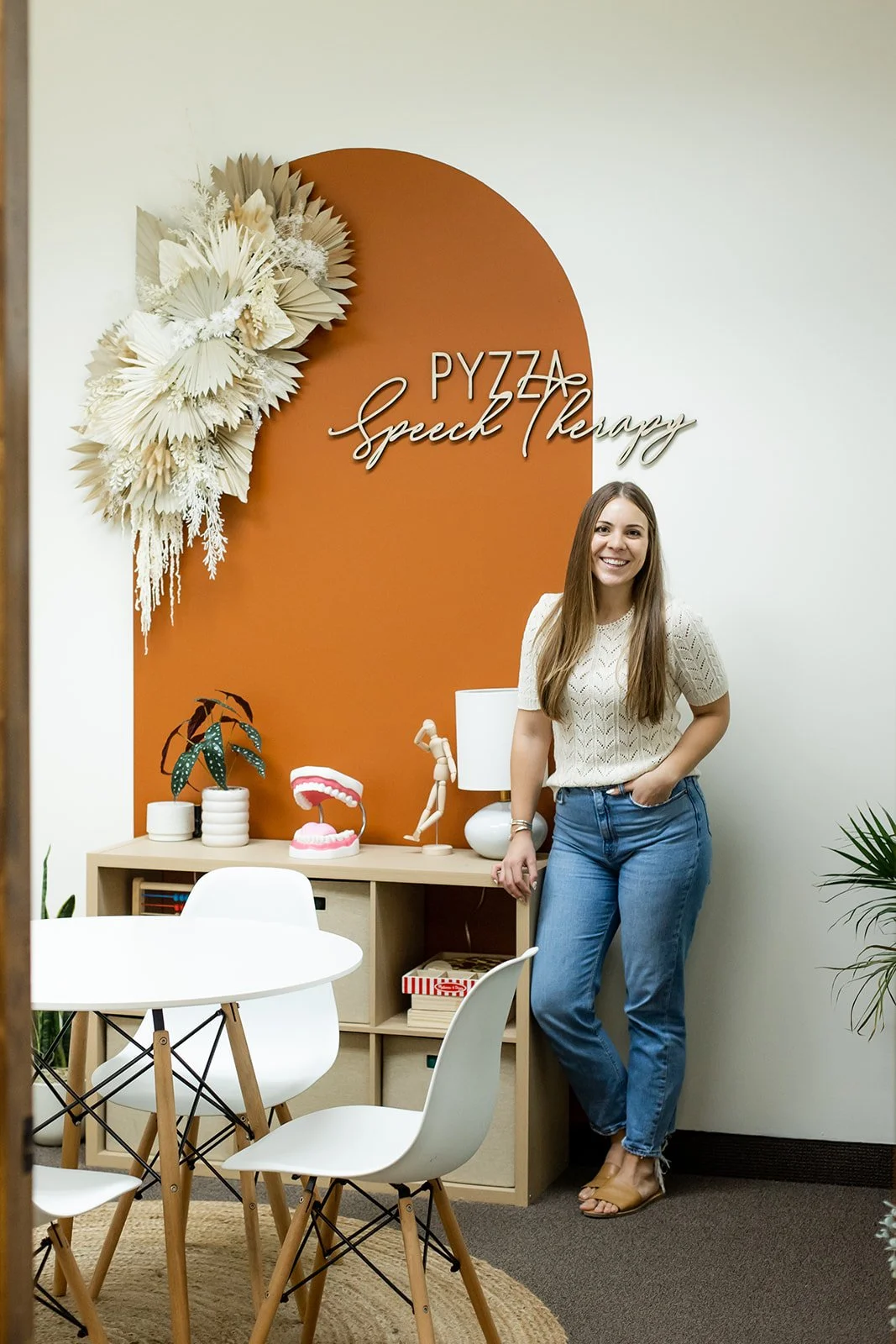
Meet the Speech Therapist in Your Corner
I've Sat Across from Enough Kids Who Felt Left Out to Know That This Work Matters
Hi, I'm Gabby, a licensed speech-language pathologist specializing in social communication and pragmatic language. I’m a UCLA PEERS® certified provider and the founder of Pyzza Speech Therapy.
Early in my career I worked with teens who told me they wanted friends but didn't know how to make them. Teaching them specific conversation skills and watching those skills open up their world was when I knew this was the work I was meant to do.
I've spent the last decade specializing in speech sounds and social communication for kids, teens, and young adults, and I still love this work as much as I did on day one. Long story short, I'm a real person who genuinely cares about the families I work with and the providers I support.
Know What You’re Looking for?



How Social Skills and Friendships Impact Mental Health in Neurodivergent Kids, Teens, and Young Adults
Discover how social skills struggles, masking, and friendships impact mental health in kids, teens, and young adults, and how neurodiversity-affirming social skills groups and programs can help.

The Hidden Reasons Your Child Might Be Struggling to Make and Keep Friends
Wondering “why can’t my child make or keep friends?” Learn the hidden social communication challenges behind friendship struggles in autism, ADHD, other neurodivergent diagnoses and how to help.

How to Spot a Truly Effective Social Skills Group for Your Neurodivergent Child
Learn what makes a social skills group truly effective—like structure, parent coaching, and real-world practice—and why research-backed programs like PEERS® work. Discover how the CONNECT Program uses these same proven strategies to support lasting friendships and confidence in tweens and teens.