
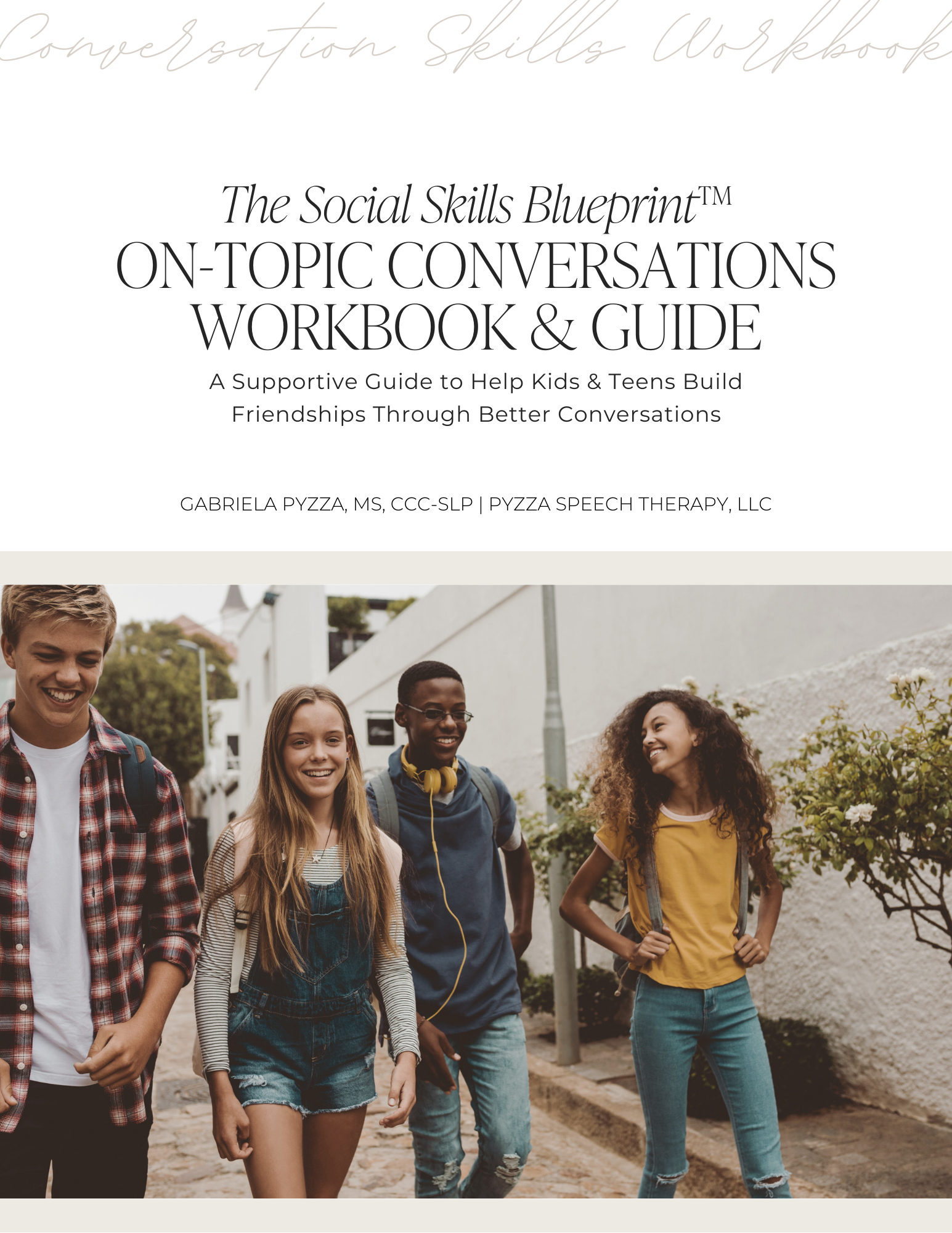
 Image 1 of 3
![On-Topic Workbook [1 ipad].png](https://images.squarespace-cdn.com/content/v1/64494fafcd7c5e077775be1a/279aee0f-d5be-470f-8294-e418402d8aa0/On-Topic+Workbook+%5B1+ipad%5D.png) Image 2 of 3
Image 2 of 3
![On-Topic Workbook [3 ipads].png](https://images.squarespace-cdn.com/content/v1/64494fafcd7c5e077775be1a/96672c49-86d3-4ed0-ba4b-e19ac55ffde9/On-Topic+Workbook+%5B3+ipads%5D.png) Image 3 of 3
Image 3 of 3
They Light Up Talking About What They Love
But everything else? That's where conversations fall apart.
If you’re a parent:
When it's a topic they love, they can talk for hours without noticing the other person has checked out.
The moment the conversation changes to something they're less interested in, they don't know what to say.
Even when everyone else has moved on, they circle back to their favorite topic again and again.
You want to help but you're not sure how to teach this or where to even start.
If you're a speech therapist or educator:
Staying on topic is a pragmatic language goal on your caseload and you want a ready-to-use resource that breaks it down clearly and progressively.
You want a neurodiversity-affirming resource you can use directly in sessions or send home for practice without a lot of prep on your end.
Your families want to help at home but need something structured to actually guide them.

What If Conversations Didn't Feel So One-Sided?
What if …
They can share what they love and notice when it's time to open the conversation up to someone else.
They know what to say, how to respond, and how to keep things going even when it's not their favorite topic.
Instead of circling back to the same subject or going off on tangents, they can follow the conversation wherever it goes.
They have real tools and strategies to connect more genuinely with the people around them.
When kids and teens have the tools to hold up their end of a conversation, so much can change. Connections feel more natural, interactions feel less stressful, and the back and forth that friendships are made of starts to feel possible.
The Workbook That Teaches Kids and Teens How to Stay On Topic in Any Conversation
Whether your child takes over conversations with their favorite topic or struggles to keep them going, this on-topic conversations workbook walks kids and teens through structured practice from supported activities all the way to real conversations.
Here’s What You Get for Just $14
Instantly download your on-topic conversations workbook for kids and teens.
A 46-page printable PDF, ready to print and use.

01
Lesson Introduction: On-Topic vs. Off-Topic
A clear teaching page parents, providers, and kids can read together to understand what staying on topic means and why it matters.
02
Staying On-Topic Visual Handout
A simple visual that makes the on-topic vs. off-topic concept easy to understand and remember.
03
11 Progressive Worksheets
Each worksheet builds on the last, from recognition activities all the way to independent practice in real conversations, with clear goals and simple instructions throughout.
Plus Bonuses!
+ Parent Cheat Sheet for Coaching at Home
10 simple, low-pressure strategies for supporting on-topic conversation skills in everyday moments.
+ 30-Day Challenge Guide
A week-by-week practice plan with parent tips and real-life activities built in along the way.
+ Guide for Handling Conversation Anxiety
7 strategies to help kids and teens feel calmer and more confident in social situations when conversations feel hard.
+ Conversation Reflection Log
A printable log to track progress together, with reflection questions and weekly check-ins that keep the focus on growth.
The Workbook That Teaches Kids and Teens How to Stay On Topic in Any Conversation
Whether your child takes over conversations with their favorite topic or struggles to keep them going, this on-topic conversations workbook walks kids and teens through structured practice from supported activities all the way to real conversations.
Questions About the Workbook
What age is this workbook designed for?
This on-topic conversations workbook is designed for kids and teens, typically ages 8 through 18, who need support with conversation and communication skills. The concepts and activities are accessible enough for younger kids with parent support, and relevant enough for older teens working on real-world conversation skills.
Is this workbook only for neurodivergent kids?
It was created with neurodivergent kids and teens in mind, including those with autism, ADHD, or social communication differences, but any child or teen who struggles with staying on topic in conversations can benefit from this social skills resource.
How do I access the workbook after purchasing?
After completing your purchase you'll receive an email with a download link. The workbook is a PDF you can print at home or at a local print shop. No special software or apps needed.
Do I need a speech therapy background to use this at home?
Not at all. Every page is written in plain, parent-friendly language, so you don't need a speech therapy background to use this social skills resource at home. The lesson introduction explains the concept clearly, the worksheets include simple instructions, and the included Parent Cheat Sheet gives you 10 low-pressure strategies for practicing in everyday moments at home.
How is this different from other social skills resources I've tried?
Most social skills resources either explain the concept without giving enough structured practice, or jump straight into activities without explaining the why behind them. This workbook does both. It starts by teaching kids and teens what staying on topic actually means, then walks them through 11 progressive worksheets that build on each other, from recognizing on-topic vs. off-topic responses all the way to practicing in real conversations. It's also neurodiversity-affirming throughout, meaning it gives kids tools and strategies rather than rigid rules to follow.
How long will it take to work through the workbook?
That depends on your child or student and how often you practice. The included 30-Day Challenge Guide gives you a suggested week-by-week plan for working through this communication skills resource at whatever pace works best, but there's no pressure to follow a specific timeline.
Can speech therapists and educators use this in sessions?
Yes, this is a great social skills resource for providers! The worksheets can be used directly in sessions, assigned for home practice, or sent home as a structured carryover tool. The progressive structure means you can start wherever it fits your student's current skill level.
What if I purchase this and it isn't the right fit?
Because this is a digital download, all sales are final. If you have questions about whether this workbook is the right fit before purchasing, feel free to reach out to me and I'm happy to help you decide.

Ready to Give Them the Social Skills Resources & Tools to Stay In the Conversation?
This workbook is one of the most practical social skills resources you'll find for this specific skill. Print it, work through it together, and start seeing what changes when staying on topic becomes a skill they actually have.
The Workbook That Teaches Kids and Teens How to Stay On Topic in Any Conversation
Whether your child takes over conversations with their favorite topic or struggles to keep them going, this on-topic conversations workbook walks kids and teens through structured practice from supported activities all the way to real conversations.